
In Brief
- You don’t “deserve” a bigger account yet—you’ve earned a process. Protect it with a payout split: taxes, stability, reinvestment.
- Scaling isn’t a leap, it’s a staircase. Stack manageable accounts, copy trade carefully, and only increase size after repeatable months.
- Your biggest risk after a payout is trading psychology. Post-win overconfidence turns a great month into a fast drawdown—unless your rules tighten.
You’ll never forget your first prop payout.
It’s not just money landing in your account—it’s proof you can follow rules, handle pressure, and pull income out of a business most people only donate to.
Then reality shows up: bills, car repairs, taxes… and the tempting idea of throwing it all into a bigger evaluation or a $300k account to “speed run” your way to freedom.
Here’s the truth from coaching funded traders: getting a payout is hard. Keeping your edge after the payout is harder. This guide shows you how to scale your prop trading career without giving profits back.
Your first payout isn’t a trophy—it’s a test
Most traders treat the first payout like a finish line. In prop trading, it’s more like a promotion.
You’re moving from “pass the evaluation” thinking to “stay funded” thinking. And the market will test you immediately—usually through one of these pressure points:
- Lifestyle pressure: “I should fix everything in my life right now.”
- Ego pressure: “I proved it once, so I should size up aggressively.”
- Heat-check pressure: “I’m on a streak—push harder while I’m hot.”
One line I want you to keep as a permanent rule:
Set aside for taxes. Cover that, then play with excess.
That’s not conservative. That’s professional.
Because the goal isn’t one payout you screenshot.
The goal is to become a funded trader who can produce payouts repeatedly—across different market conditions.
Pro Tip: If your next month of trading depends on this payout, you’re not scaling—you’re gambling with your stability. That pressure will leak into your execution.
The payout split that keeps you funded (and calm)
Before you buy another challenge, upgrade account size, or start copying across multiple accounts, build a simple structure. You want your payout to reduce stress—not create new stress.
Taxes first (even if you don’t want to)
Prop payouts can create a nasty surprise later if you treat them like “free money.” Don’t.
Do this the same day you get paid:
- Move a tax portion into a separate account
- Label it “taxes” (make it psychologically untouchable)
- Pretend it doesn’t exist
You don’t need the perfect percentage to start. You need the habit.
Pro Tip: The fastest way to turn a good payout into panic trading is realizing you owe money you already spent.
Life stability second (your buffer)
This is the part traders love to skip because it feels “unambitious.” It’s actually the move that protects your trading psychology.
If your car needs repairs, handle it. If you’re behind on essentials, catch up. If you have no buffer at all, build one.
A practical minimum:
- Cover urgent repairs (car, rent, insurance, tools you need to work)
- Build 2–4 weeks of expenses as a starter emergency fund
That small buffer changes how you trade. You stop forcing setups. You stop “needing” today’s profit.
Pro Tip: When survival pressure is gone, decision-making gets cleaner. Clean decisions are edge.
Reinvest last (but consistently)
Only after taxes and stability are covered should you reinvest into prop trading.
A simple payout split many funded traders follow:
- 30–40% taxes (location-dependent)
- 30–40% stability (repairs + buffer)
- 20–40% reinvestment (new evaluations, account stacking, tools)
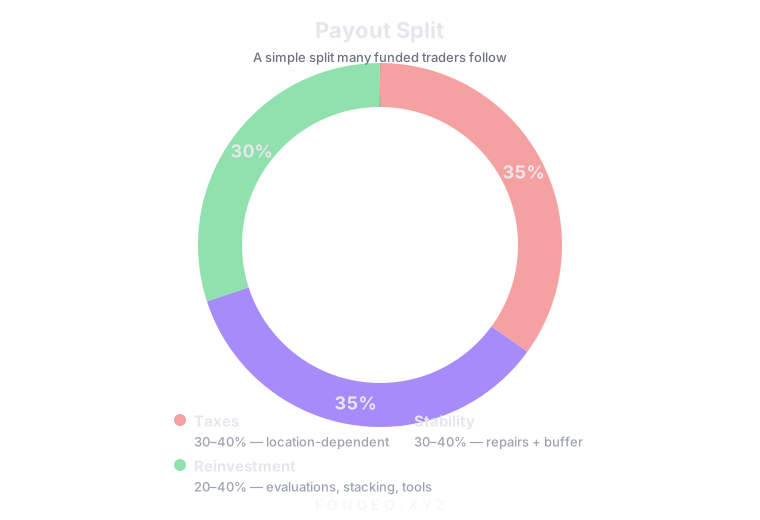
If your payout is small, keep the same structure and scale the dollars down.
Pro Tip: Your first payout should buy you time and clarity—not just a bigger account.
Bigger account vs. stacking accounts: the prop-trader answer
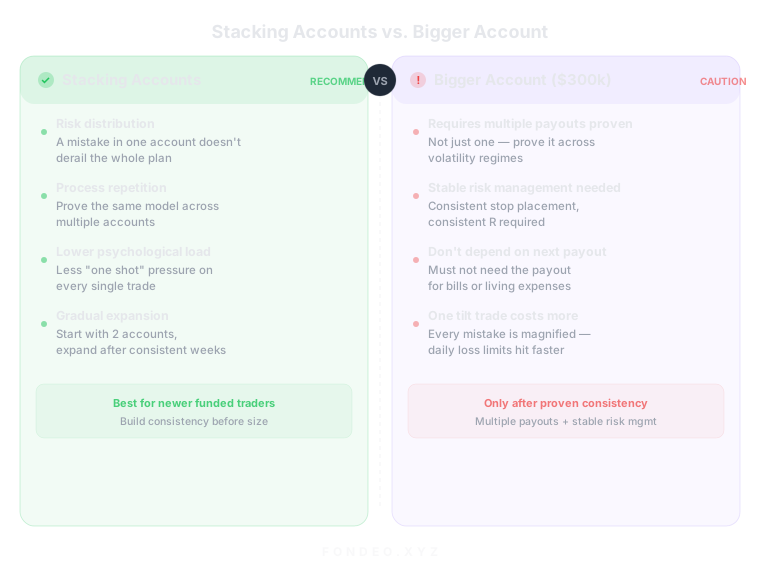
After your first payout, you’ll hear two common paths:
- Jump into a larger account immediately (ex: $300k)
- Stack accounts and copy trade them to scale
The “stack accounts” approach is popular because it feels like momentum—and it can work.
But here’s the professional version: stacking usually beats jumping straight to max size for newer funded traders—if your execution is consistent.
Why stacking often beats jumping to $300k
A larger funded account doesn’t only magnify upside.
It magnifies every mistake:
- One tilt trade costs more
- One rule break hits daily loss limits faster
- One day of overtrading becomes expensive tuition
Stacking can give you:
- Risk distribution: a mistake in one account doesn’t derail the whole plan
- Process repetition: you’re proving the same model across accounts
- Lower psychological load: less “one shot” pressure
When a bigger account does make sense
A bigger account can be a great move when:
- You’ve produced multiple payouts (not one)
- Your risk management is stable (consistent stop placement, consistent R)
- You’re not dependent on the next payout to pay bills
If you’ve only been at this for a month or two, you might be skilled—but you’re still unproven across volatility regimes. Sideways periods, choppy news-driven sessions, summer liquidity—those conditions expose weak discipline fast.
Pro Tip: Scale after you prove you can handle a slow month without forcing trades.
A step-by-step scaling plan after your first payout
Here’s a clean “do this next” plan that fits prop trading rules and funded trader realities.
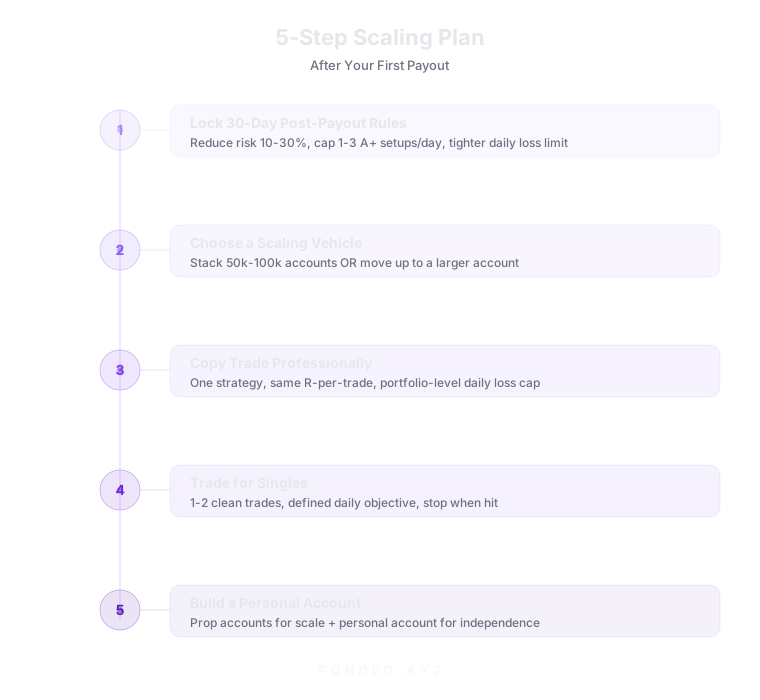
Step 1: Lock 30-day post-payout rules
After a payout, confidence rises. That’s good—until it becomes entitlement.
For the next 30 days, tighten your playbook:
- Reduce risk per trade by 10–30%
- Cap yourself at 1–3 A+ setups per day
- Use a daily loss limit tighter than the firm’s
This is how you avoid the classic “payout → overconfidence → drawdown” cycle.
Pro Tip: The month after a payout is not the time to prove you’re a hero. It’s the time to prove you’re consistent.
Step 2: Choose a scaling vehicle (ladder, not leap)
Pick one path and commit for a full month. Don’t mix strategies mid-week.
Option A: Stack 50k–100k accounts
- Add one account at a time
- Only add another after 2–4 consistent weeks (same execution, same rules)
- A subscription model with auto-resets makes this kind of measured stacking far less stressful
Option B: Move up to a larger account
- Only if your stability bucket is handled
- Only if you can accept lower % risk (because dollars swing faster)
The real scaling skill is patience.
Step 3: If you copy trade, do it like a professional
Copy trading is a multiplier. It multiplies what you already are.
So treat it like a system, not a shortcut:
- Copy only one strategy you can execute cleanly
- Keep the same R-per-trade model across accounts
- Apply a portfolio-level daily loss cap (not just per account)
- Start with two accounts, then expand
Execution detail matters here. Slippage, contract sizing differences, or rule mismatches between accounts can turn “copy trading” into inconsistent risk.
Pro Tip: Copy trading multiplies your discipline—or multiplies your mistakes. There’s no third option.
Step 4: Trade for “singles,” not home runs
A funded trader survives by stacking base hits.
Instead of trying to crush one huge day, aim for something repeatable:
- One or two clean trades
- A defined daily profit objective
- Stop trading when you hit it
Your number might be $50, $200, or $500. The point is the structure: small wins with strict stops.
Pro Tip: In prop trading, the account rules punish volatility in your behavior more than volatility in the market.
Step 5: Build a personal account in the background
Prop trading is powerful when you’re undercapitalized.
Long-term, the best position is both — and eventually you may be ready to trade full-time:
- Prop accounts for scale
- A personal account for flexibility and independence
Allocate a small percentage of payouts to your own account. Even if it feels slow at first, it compounds into freedom.
The most common post-payout mistakes (and how to avoid them)
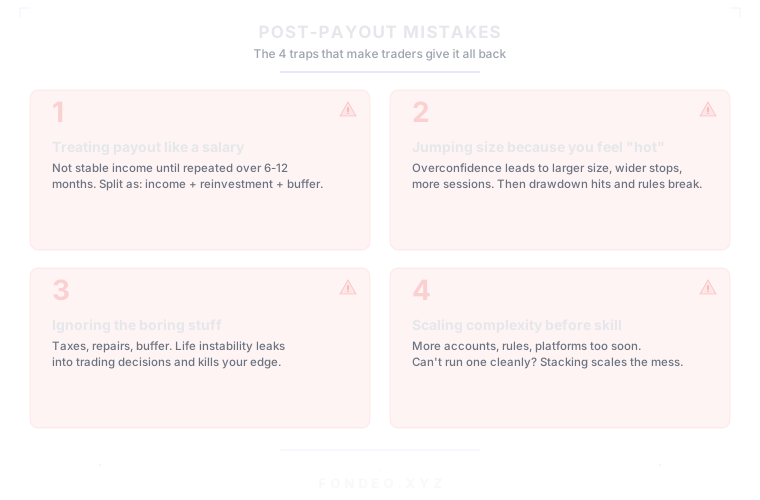
This is where traders give it back—usually not because their strategy broke, but because their behavior changed.
Mistake 1: Treating a payout like a salary
A payout is not stable income until it’s repeated.
Until you’ve logged 6–12 months of consistent performance, treat payouts as:
- part income
- part reinvestment
- part buffer
Mistake 2: Jumping size because you feel “hot”
Post-win overconfidence is sneaky.
It often shows up as:
- larger size
- wider stops
- more sessions
- lower-quality setups
Then a normal drawdown hits and it feels personal—so you push harder and break rules.
That emotional swing is the real danger.
Mistake 3: Ignoring the boring stuff (taxes, repairs, buffer)
If your car might break down, your rent is tight, and you’re stressed, your trading decisions will reflect that.
Stability isn’t anti-ambition.
Stability is what lets ambition compound.
Mistake 4: Scaling complexity before scaling skill
More accounts, more rules, more platforms, more sessions—too soon.
If you can’t run one account cleanly, stacking accounts just scales the mess.
Pro Tip: Complexity is a hidden form of overtrading.
Funded trader habits that keep you paid
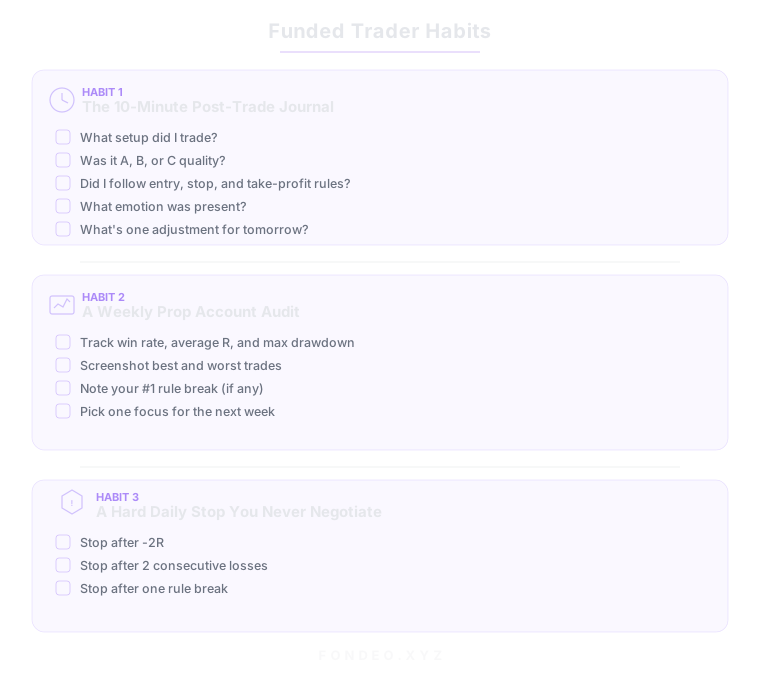
You don’t need hype. You need a routine that protects your edge.
The 10-minute post-trade journal
After you finish trading, write:
- What setup did I trade?
- Was it A, B, or C quality?
- Did I follow entry, stop, and take-profit rules?
- What emotion was present?
- What’s one adjustment for tomorrow?
That’s it. Ten minutes.
This habit builds self-awareness, and self-awareness is what prevents repeated mistakes.
A weekly prop account audit
Once per week (same day, same time):
- Track win rate, average R, and max drawdown
- Screenshot best and worst trades
- Note your #1 rule break (if any)
- Pick one focus for the next week
Not five goals. One.
A hard daily stop you never negotiate
Your firm has limits. You need your own tighter limits.
Examples:
- Stop after -2R
- Stop after 2 consecutive losses
- Stop after one rule break
If you feel like you “should keep going,” that’s often your signal that emotion is taking the wheel.
Pro Tip: A daily stop is not a restraint. It’s how you survive long enough for your edge to play out.
Your next move: keep the snowball rolling—without slipping
If you told me: “I got my first payout. Should I reinvest into a $300k account even though my car needs repairs?”
My answer would be simple:
- Handle taxes
- Fix the car / cover essentials (remove pressure)
- Reinvest a portion into a gradual scaling plan (stack or ladder) — and secure your withdrawal before sending funds
- Trade smaller for 30 days to protect your trading psychology
You already proved you can do it once.
Now prove you can do it again—cleanly, calmly, and on purpose.
Your action step today:
- Decide your payout split
- Write your 30-day post-payout rules so you stay accountable
- Choose one scaling path and commit
Consistency beats intensity—every time.
If you’re ready to turn that first payout into a long-term funded trader career, build your process with Fondeo.xyz. You’ll get the structure to protect the downside, tighten risk management, and scale without handing it back.
Keep showing up,
Jake Salomon